Crystal Healing – An Ancient Practice in the Modern World
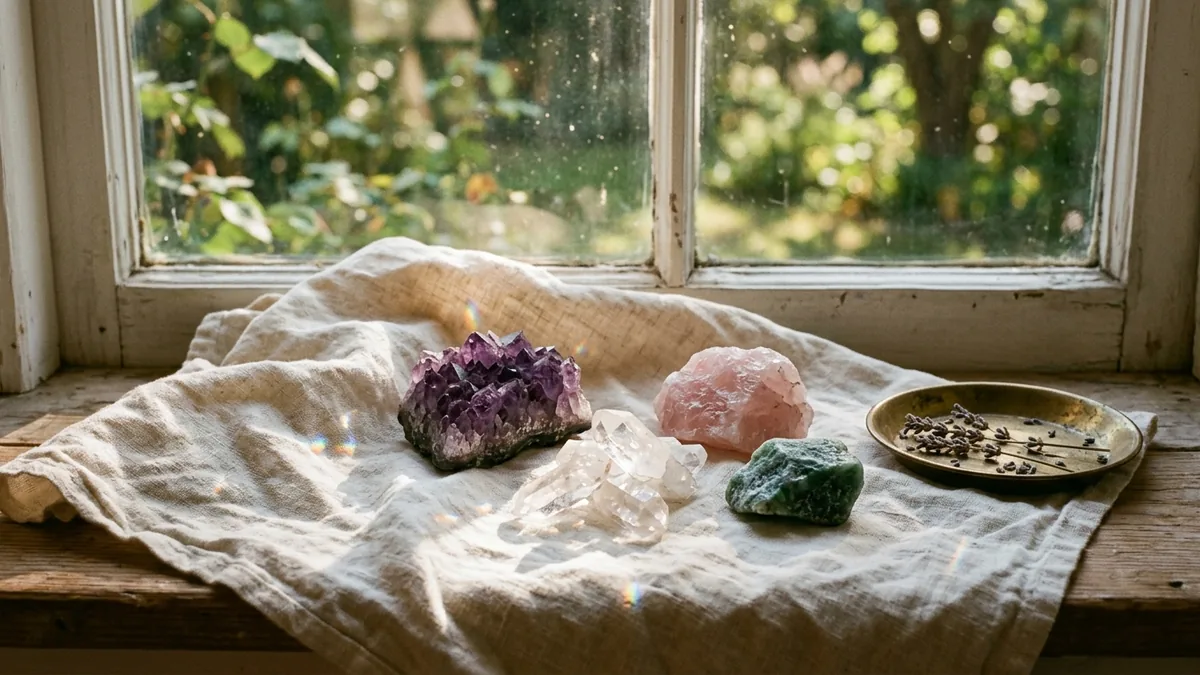
Crystals and gemstones have accompanied humanity since the dawn of time. They adorned the crowns of rulers, protected warriors before battle, rested on priests' altars, and lay in the hands of healers. Today, in the age of meditation apps and holistic wellness, they're enjoying a spectacular revival – in beauty salons, therapy rooms, and on the bedside shelves of millions of people around the world.
What is crystal healing?
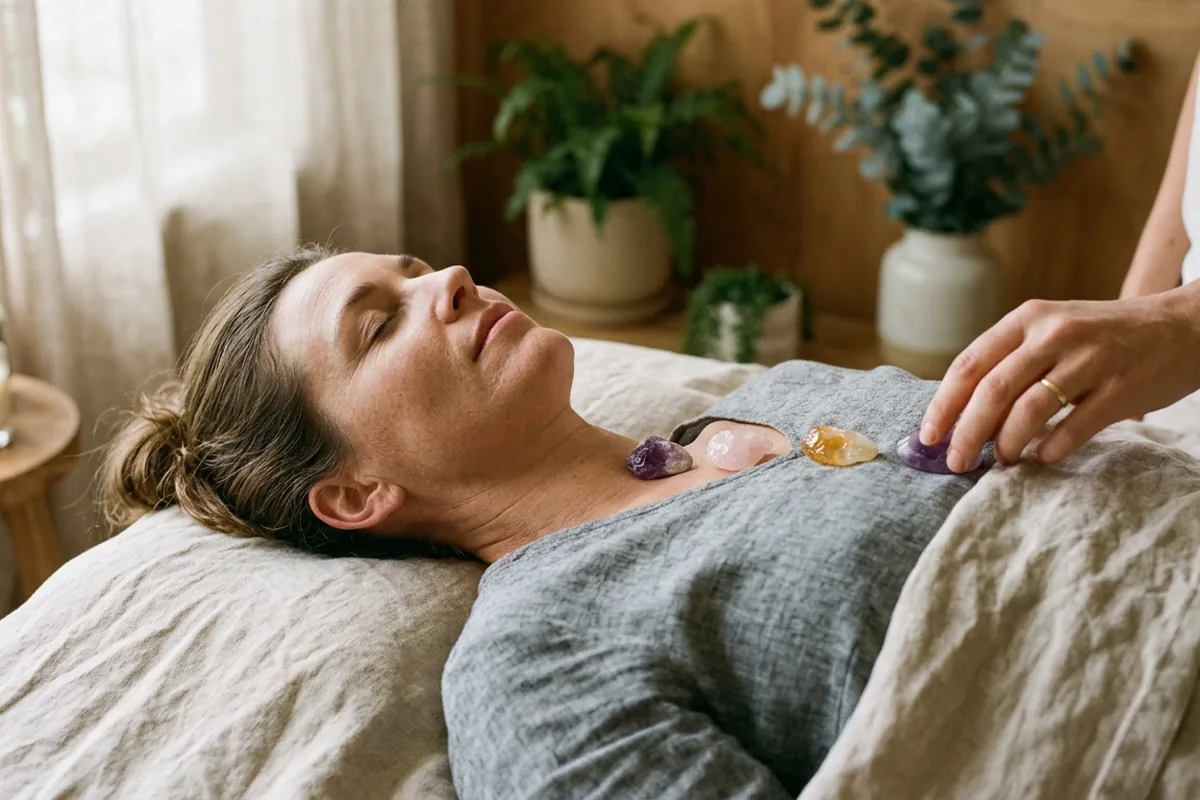
Crystal healing, also known as lithotherapy, is a practice that uses minerals, crystals, and gemstones as tools to support human wellbeing. It rests on the idea that every stone carries a unique vibration or energy that can interact with the energy of the human body. Practitioners of this method place stones on a client's body, in their surroundings, or recommend carrying them as jewelry or talismans.
A crystal healing session can last anywhere from thirty minutes to over an hour. The client typically lies in a comfortable position while the practitioner selects and arranges the stones according to a chosen system – often following a chakra map, the body's energetic centers rooted in Hindu tradition.
Roots stretching back millennia
It's hard to pinpoint a single moment when crystal healing was born, because belief in the power of stones is as old as civilization itself. Different cultures – independently of one another – developed elaborate systems of working with minerals, believing in their protective, healing, and spiritual properties.
Ancient Egypt
The Egyptians used lapis lazuli, turquoise, and carnelian both in funerary rituals and in everyday life. They believed malachite protected against evil and that carnelian gave courage. Stones adorned amulets worn by pharaohs and ordinary people alike.
China and jade
In Chinese medical tradition, jadeite and nephrite have held a special place for over five thousand years. They were considered stones of life, harmony, and immortality. To this day, jade remains one of the most valuable gifts one can give in Chinese culture.
Ancient Greece
The Greeks believed that amethyst protected against drunkenness – its name literally means "not intoxicated." Hematite was associated with Ares, the god of war, and was rubbed onto soldiers' bodies before battle. The Greeks regarded rock crystal as eternal ice, too hard ever to melt.
India and Ayurveda
In India, the Ayurvedic tradition has incorporated stones and minerals into healing practices for thousands of years. Jyotish – Vedic astrology – recommends wearing specific stones depending on the arrangement of planets in a person's birth chart.
Medieval Europe
Medieval Europe was no stranger to the fascination with stones either. Hildegard of Bingen, a 12th-century mystic and healer, described the medicinal properties of dozens of minerals in her writings. Sapphire was said to heal the eyes, ruby to protect the heart, and emerald to strengthen memory.
Belief in the power of stones runs through every great civilization – from the valleys of the Nile to the courts of the Chinese emperors. It's one of the most universal motifs in the history of spirituality.
The most popular stones and their properties
Modern crystal healing has developed an elaborate system assigning specific effects to particular stones. Here are some of the most popular:
- Amethyst – one of the most popular stones in therapy. It's credited with calming and protective properties, and is often recommended for people struggling with stress, insomnia, or anxiety. Its purple color is linked to the crown chakra and spiritual growth.
- Rose quartz – known as the stone of unconditional love. Used in the context of relationships, working with emotions, and building self-worth. Credited with a gentle, soothing effect.
- Obsidian – volcanic glass considered in crystal healing to be a stone of protection and grounding. Used to "cleanse" the energy of one's surroundings and ward off negative influences.
- Citrine – a yellow quartz associated with energy, optimism, and prosperity. Sometimes called the "merchant's stone" and often placed at workplaces or cash registers.
- Malachite – a vivid green stone associated with transformation and protection. In some traditions it's considered an energy amplifier – of positive and negative energy alike, hence the emphasis on caution when using it.
- Black tourmaline – one of the most commonly recommended protective stones, said to "absorb" negative energy from the surroundings.
The chakra system as a therapeutic map
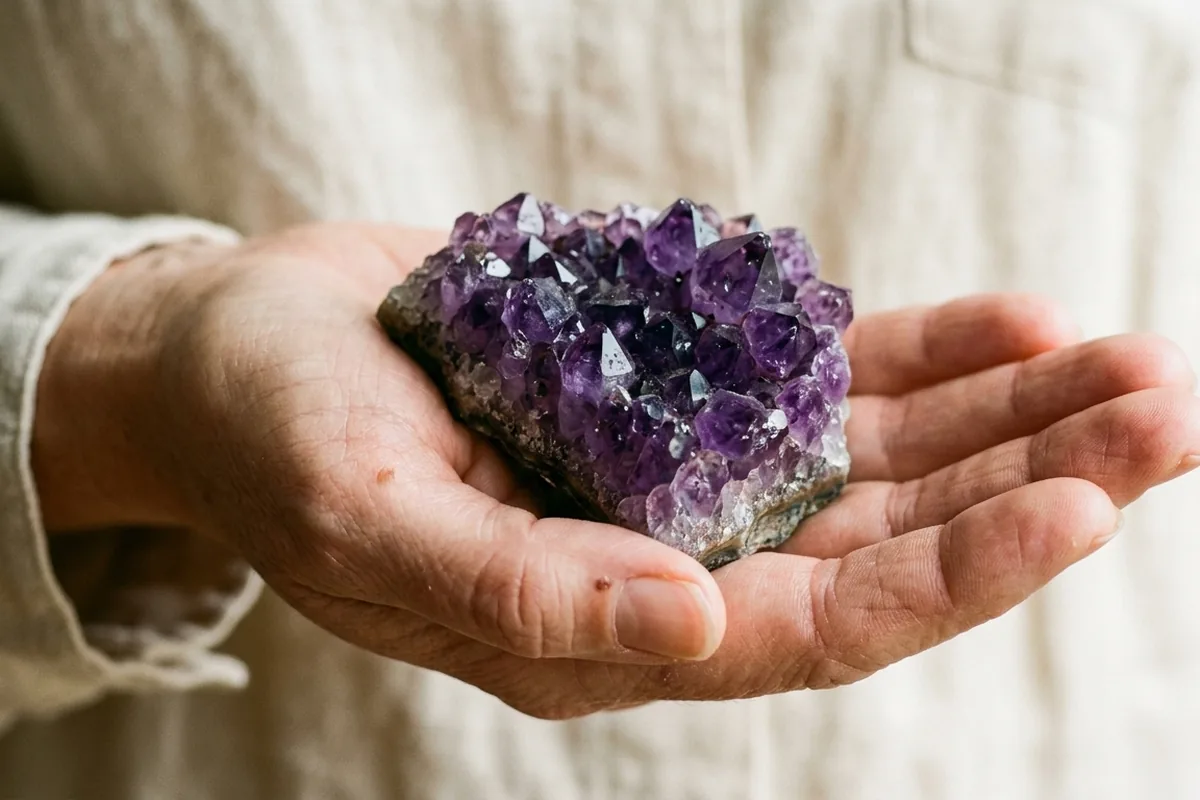
Most modern crystal healing practitioners base their work on the chakra system – seven main energy centers arranged along the spine, from the tailbone to the crown of the head. Each chakra governs different areas of physical, emotional, and spiritual life, and each has its own color and corresponding stones.
The root chakra, located at the base of the spine, is linked to a sense of safety and grounding. It's associated with red and black stones, such as garnet or black tourmaline.
The heart chakra, at the center of the chest, is tied to love and relationships – here practitioners often work with green aventurine or rose quartz.
The third eye chakra, between the brows, governs intuition and perception – its stones are lapis lazuli and amethyst.
During a session, a practitioner may try to "balance" chakras they believe are blocked or overactive by selecting the right stones and arranging them on the client's body.
Crystals in contemporary culture
The revival of crystal healing in recent decades is a sociologically fascinating phenomenon. Stones now appear not only in holistic therapy rooms but throughout pop culture – music and film stars openly talk about their mineral collections, luxury hotels offer crystal rituals, and the market for raw-stone jewelry is growing fast.
The wellness industry, worth hundreds of billions of dollars globally, has eagerly embraced crystal aesthetics. Mineral shops are popping up like mushrooms after rain, both brick-and-mortar and online. Crystals have become elements of interior decor, props in photo shoots, and a symbol of a particular lifestyle.
Social media has played an enormous role in this phenomenon. Photos of mineral collections, videos of crystals being "charged" under moonlight, and guides on matching stones to zodiac signs collect millions of views.
The practical side – how to work with crystals
People who practice crystal healing on their own do so in many different ways. Here are the most common methods:
- Carrying a stone with you – in a pocket, bag, or as a pendant. This is the simplest way to work with a mineral and keep it within reach throughout the day.
- Placing crystals around the home – amethyst by the bed for better sleep, citrine at the workplace for productivity, black tourmaline by the entrance for protection.
- Meditating with a stone – held in the hands or resting on the body. It helps focus attention and deepen a moment of reflection.
- Crystal grids – geometric arrangements of stones believed to amplify each other's effects. Often composed according to sacred geometry.
Cleansing and programming stones
An important part of the practice is cleansing and programming stones. It's believed that crystals "absorb" the energy of their surroundings and require regular cleansing. Popular methods include:
- Submerging in water (though not all stones are water-safe – malachite or selenite can be damaged).
- Exposing the stone to sunlight or moonlight – especially during a full moon.
- Smudging with sage or palo santo smoke.
- Contact with selenite, which is considered a self-cleansing stone.
Programming involves meditatively "imprinting" an intention onto a stone – picturing the purpose it's meant to serve. For practitioners, this ritual gives the mineral a personal, intentional dimension.
Crystal healing as an experience
Regardless of the theoretical framework, for many people working with crystals is above all a sensory and ritual experience. The touch of a cool, smooth stone, its weight in the hand, the play of light on its surface – these are aesthetic stimuli that many people describe as soothing and pleasant.
Ritual – any ritual – serves a specific psychological function in a person's life. It provides structure, creates moments of intentional focus, and separates the everyday from moments of reflection. For those who practice it, crystal healing often fulfills exactly that role – regardless of how they understand the mechanism behind it.
The value of a ritual doesn't need to come from its metaphysical truth – sometimes intentionality, pausing, and focus alone are enough to change the quality of our day.
Limitations and disclaimers
It's worth saying plainly what some enthusiasts prefer to leave unsaid: crystal healing is not a recognized medical method and should not replace diagnosis or treatment provided by a doctor. There is no reliable clinical research confirming its effectiveness in treating specific physical or mental conditions.
The potential benefits of working with stones – a sense of calm, focus, aesthetic pleasure – are real and valuable, but they should be distinguished from promises of curing illness. Crystals can be a beautiful addition to a daily routine of self-observation and self-care. They are not, however, a substitute for professional healthcare.
Summary
Crystal healing is one of the oldest and, at the same time, one of the most enduring spiritual practices known to human civilization. From Egyptian amulets and Chinese jade, through the amethysts of the ancient Greeks, to today's mineral collections in modern interiors – stones have accompanied humanity without interruption in its search for harmony and meaning.
Stones can be treated as energetic tools, as a ritual of mindfulness, or simply as beautiful works of nature – each of these perspectives is valid. There's one common thread: working with crystals invites us to pause and touch something that has existed far longer than we have. In today's pace of life, that alone has value.
If you're interested in the broader context of spiritual practice, it's worth reading about the Moon and its influence on energetic cycles, or checking your horoscope to learn the astrological context of the day.